-
Overview
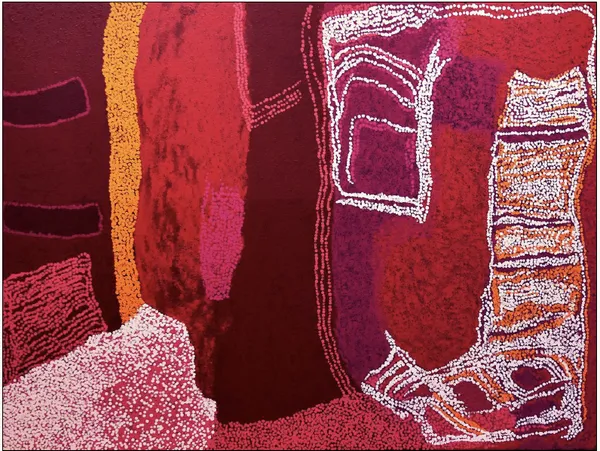
 Emily Kame Kngwarreye, Oorootena (Wild Fruits),1991
L’Appartement is proud to announce Great Affinities, an exhibition that brings together a diverse group of international artists working across different generations and cultural backgrounds to create a transhistorical dialogue between the works of artists such as Sol LeWitt, Howardena Pindell, Marina Adams, Antonakis, Jean Paul Riopelle, Piero Dorazio and André Masson, alongside renowned Australian Aboriginal artists including Emily Kame Kngwarreye, Clifford Possum Tjapaltjarri, Mirdidingkingathi Juwarnda Sally Gabori, Helen McCarthy Tyalmuty, Nyurapayia Nampitjinpa (aka Mrs. Bennett), Yukultji Napangati and Yannima Tommy Watson.
The exhibition intended as a visual dialogue between two seemingly disparate art making traditions, explores abstraction as a universal language that offers common ground, exceeding cultural, geographical or linguistic boundaries.
-
-
Press Release
L’Appartement is proud to announce Great Affinities, an exhibition that brings together a diverse group of international artists working across different generations and cultural backgrounds to create a transhistorical dialogue between the works of artists such as Sol LeWitt, Howardena Pindell, Marina Adams, Antonakis, Jean Paul Riopelle, Piero Dorazio and André Masson, alongside renowned Australian Aboriginal artists including Emily Kame Kngwarreye, Clifford Possum Tjapaltjarri, Mirdidingkingathi Juwarnda Sally Gabori, Helen McCarthy Tyalmuty, Nyurapayia Nampitjinpa (aka Mrs. Bennett), Yukultji Napangati and Yannima Tommy Watson. The exhibition intended as a visual dialogue between two seemingly disparate art making traditions, explores abstraction as a universal language that offers common ground, exceeding cultural, geographical or linguistic boundaries. Pursuing a different collective vision, the works in this exhibition reveal often surprising connections and trace an interweaving skein of approaches that reveal a deep, ever-evolving engagement with abstraction.
Central to the exhibition is a 1971 painting by American artist Howardena Pindell in conversation with two paintings on canvas by Anmatyerre artist Emily Kame Kngwarreye, one of Australia’s most important Aboriginal artists. Howardena Pindell’s spray dot paintings are among her most iconic works. The artist first created these paintings in New York in the early 1970s and they served as progenitors of much of her abstract work to follow. Pindell’s expansive canvases are the result of a continued personal expoloration and understanding of color, its cultural significance and mirroring in the natural world.
Emily Kame Kngwarreye’s artistic practice was rooted in Indigenous Australian beliefs and a cultural responsibility to ancestral lands. Working in the remote central desert of Utopia, her oeuvre was deeply inspired by her heritage, Anmatyerre spirituality, and surrounding landscapes. Beginning in 1988–89, when she was already in her seventies, Kngwarreye’s paintings, characterized by layered brushstrokes and dabs of paint, embody the vibrancy and rhythm of the natural world. Kngwarreye shifted the expectation that Aboriginal art must remain bound to traditional iconography and instead began to explore the open fields of colour-based abstraction. The 2003 painting from Sol LeWitt’s famous Brushstroke series reveals the influence Australian Central Desert painters had on his practice, including Kngwarreye, whose work he first encountered at the Venice Biennale in 1997. LeWitt described feeling a ‘great affinity’ for Kngwarreye’s work and went on to become an avid collector of paintings by her.
Clifford Possum’s canvases are renowned for their complexity, detail, and vibrancy. Works such as Lightning Dreaming (1996) are masterpieces of narrative art, weaving together the Dreaming stories of creation, ancestral beings, and the laws that govern the natural world. Celebrating a shared human connection to nature and the stories that bind us all, Possum’s paintings transcend language and culture, speaking a universal language of emotion and beauty. André Mason’s, Un jour d’automne (1960) also speaks to the land’s power to connect us all. Evoking a dreamlike landscape, autumnal colors dominate the canvas, with warm shades of orange, red, and brown, evoking falling leaves and wooded landscapes. Scattered delicate touches of blue, green, purple, and yellow suggest the lingering remnants of nature gradually yielding to the imminent arrival of winter.
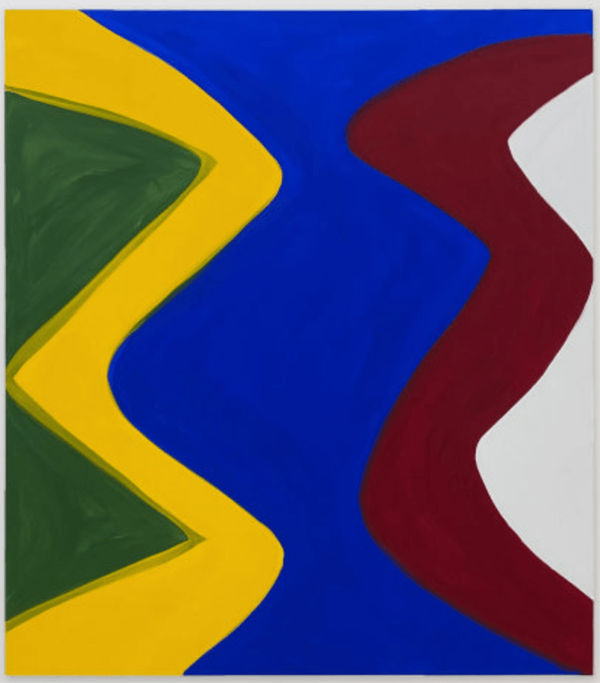
Like Emily Kame Kngwarreye, Sally Gabori started painting in 2005 when she was in her mid 80s and as an artist that came to painting late in life, her works bears witness to a boundless imagination and freedom of invention. Her colorful and expressive abstract paintings create a radical language that expresses sensations of place, life and cultural memory in diaspora. Although the works may appear abstract, they radiate emotional warmth in their celebration of her family and her home. The shapes of Who’s Afraid of The Red, White and Blue (2023) by Marina Adams also reveal a powerful internal rhythm beneath their surface simplicity. While purely abstract, the work’s organic, free-flowing patterns are redolent of landscapes. Adams consistently infuses her colors with spiritual energy, imbuing her paintings with vitality. Seeing Sally Gabori’s colorful and expressive abstract paintings in close proximity to Marina Adams’ contemporary contemplation of color, line, and improvisation, it becomes evident that although profoundly anchored in the history of her people, Gabori’s paintings bear witness to a remarkable pictorial modernity.
The diverse group of artists presented in this exhibition have constantly throughout their practices tried to redefine the concept of abstraction and its possibilities for the painterly process. They have used art and color to transcend cultural boundaries and the limitations imposed by language. Most importnatly, the exhibition’s geographic breadth demonstrates that artists from all over the world were exploring similar themes of materiality, freedom of expression, perception and gesture, endowing abstraction with their own specific cultural contexts.
-
-
Works
-
Sol LeWitt, Horizontal Brushstrokes, 2003
-
Emily Kame Kngwarreye, Yam Dreaming, 1995
-
André Masson, Un jour d’automne [An autumn day], 1960
-
Sally Gabori (Mirdidingkingathi Juwarnda), Big Crocodile at McKenzie River, 2006
-
Sally Gabori (Mirdidingkingathi Juwarnda), McKenzie River, 2009
-
Marina Adams, Who's Afraid of The Red, White and Blue, 2023
-
Sally Gabori (Mirdidingkingathi Juwarnda), Dibirdibi Country, 2008
-
Jean Paul Riopelle, Untitled, 1949
-
Clifford Possum Tjapaltjarri, Lightning Dreaming, 1996
-
Antonakis, He wandered this Earth for millennia in misery and solitude waiting for her, 2024
-
George Hairbrush Tjungurrayi, Mamultjulkunga, 2018
-
Piero Dorazio, Senza titolo [Untitled], 1957
-
-
Artist
-

Marina Adams
-

ANTONAKIS
-

Piero Dorazio
-

Mirdidingkingathi Juwarnda Sally Gabori
-

Sarrita King
-

Emily Kame Kngwarreye
-

Sol Lewitt
-

André Masson
-

Nyurapayia Nampitjinpa ("Mrs. Bennett")
-

Yukultji Napangati
-

Howardena Pindell
-

Jean Paul Riopelle
-

Clifford Possum Tjapaltjarri
-

George "Hairbrush" Tjungurrayi
-

Helen McCarthy Tyalmuty
-

Yannima Tommy Watson
-
-
Publication